

-
 Courtesy of Tawiya Andrew-WilliamsOur Living Lands Producer Daniel Spaulding spoke to Andrew-Williams, a Nimíipuu Environmental Scientist and a student at Washington State University, about incorporating traditional foods into modern dishes, food sovereignty, and more.
 -
 Antares NuclearThe microreactor from Antares, a private nuclear technology company, had a successful nuclear fission reaction for the first time at Idaho National Lab. National officials dubbed it ‘historic.'


-
 Researchers looked at more than 750,000 wildfires in the West between 1992 and 2020. In the second half of that period, the number of reported wildfires were down by 31%, but acreage burned was up 40%.
 -
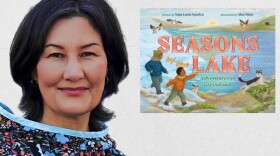 Our Living Lands Producer Daniel Spaulding spoke to author Naja Lund Aparico about her new book, environmental changes in the Arctic, and the importance of Indigenous representation in children's literature.
 -
 Nox the baby owl is helping shed light on the raptor conservation work the Peregrine Fund does in Africa.
 -
 New geological maps in east-central Idaho are revealing hidden deposits of minerals, which are helping scientists better understand things like earthquake faults and groundwater systems.
 -
 Idaho Fish and Game is looking for volunteers to survey milkweed patches and count monarch butterflies across the state this summer. Populations have dwindled over the past decade and scientists aren’t sure why.
 -
 Idaho is adding its first new state park in almost 30 years, with Twin Peaks Ranch State Park, offering 677 acres of beautiful wilderness.
 -
 National Park sites in southern Idaho drew in hundreds of thousands of visitors last year, despite a 43-day partial government shutdown and staff shortages.
 -
 Jasmine Higheagle is the secretary for the Nez Perce Fish and Wildlife Commission. Our Living Lands Producer Daniel Spaulding spoke to Higheagle about how the changing climate is impacting fish and water.
 -
 At night, temperatures are often cooler and the air is wetter, which gives wildland firefighters a long window to make up significant ground when trying to suppress blazes. But that pattern is breaking down, a trend driven by human-caused climate change, according to a new study.
 -
 Plastic's invisible trail runs through our air, food and oceans — reshaping ecosystems and human health in ways we're only beginning to understand.


