


Move over Jimothy; Idaho has its own raccoon-like animal to fawn over. Researchers from the University of Idaho have documented what might be the state’s first ringtail population.
What are ringtails, you say?
Well, first and foremost, they're very cute. Sometimes described as “skinny raccoons”, the secretive little creatures are in fact from the same family, but from afar look more like lemurs crossed with weasels. Distinctive for their bushy tails, they are cat-sized and nimble, with big bright eyes. They live in arid to semi-arid lands across Mexico and the Southwestern U.S and not a lot is known about them.
A University of Idaho pilot study using trail cams found evidence they might’ve expanded their reach and established themselves in southern Idaho.
“[Earlier] camera surveys in the region failed to detect ringtails; the new findings indicate the species’ distribution may be shifting northward,” the university said in a statement announcing the findings.
There’s been a scattering of ringtail sightings in Idaho over the last few decades -the most notable one, a lucky guy who snuck into a sugarbeet factory near Twin Falls in 2021 - but usually, they are pretty elusive. Nocturnal omnivores, ringtails generally live away from humans. Rare sightings were previously chalked up to some accidentally wandering north or someone’s pet getting lost.

Idaho Fish and Game does not consider them residents of the Gem State.
So in 2023, U of I researcher David Ausband and Peter Rebholz set up trail cams in the Rock Creek canyon system of the Sawtooth National Forest.
“This was the first systematic scientific effort to say, are these just random or do we actually have a bunch of ringtails living in Idaho now?” Ausband said.
Over the course of three months, the researchers put out fruit, skunky smelling food and Tang fruit juice in front of the trail cams to see if any ringtails would drop by.
And they did.
Nine were caught on camera across six different locations, enough of them to think they might’ve moved into Idaho permanently.
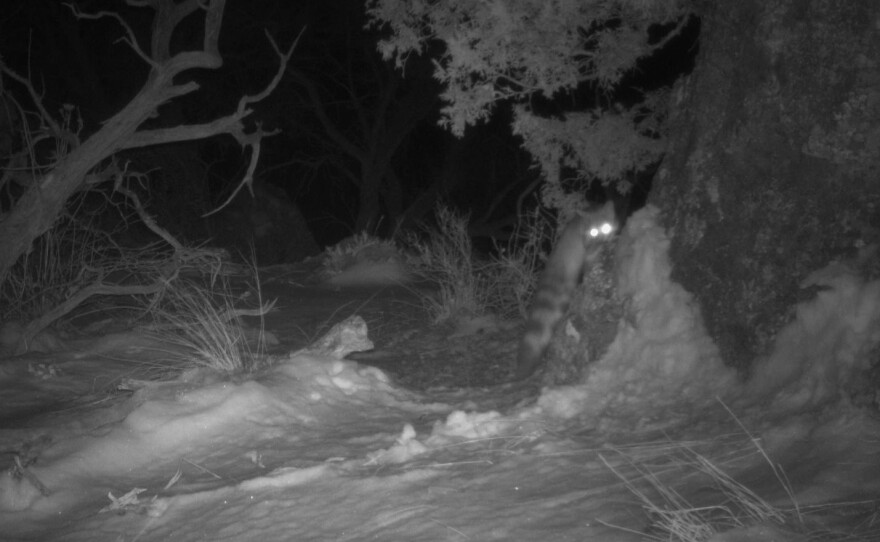
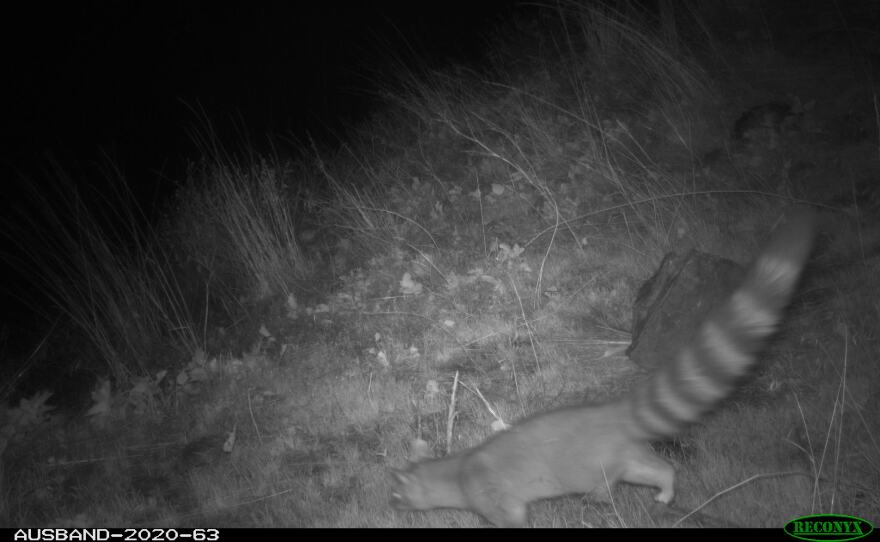

One picture captures a ringtail’s big bright eyes catching the lens, flashing like two tiny headlights in the night.
Ausband said they can climb just about anything. They live in trees and on cliffsides, rearing their young in hidden nooks and crannies.
“They've got these padded feet that are really good at gripping,” he said. “They can actually go down a cliff head first because they can rotate their hind limbs.”
And that might be one explanation for their presence in southern Idaho. Decades of fire suppression efforts in the West means sagebrush junipers communities are spreading into the state. And ringtails love to scramble up junipers.
“They're great at climbing," he said. "So if you have a bunch of trees creeping into new habitat, the hypothesis is that they follow that juniper encroachment."
Things are pretty bleak in the conservation world. The acceleration of climate change and habitat destruction means a lot of animal populations around the world are struggling. But ringtails seem to be doing pretty good, Ausband said.
“This is kind of a cool story of a species that might actually be expanding its range, which is a breath of fresh air,” he added. “How often do you get to show that your state has a new species of mammal?”
“It's pretty inspiring for me to know these guys are out there at night, climbing cliffs and trees and working their way into Idaho with their cool little paws and doing what they do out there while we sleep in our beds at home,” Ausband said.
While multiple animals were documented, the researchers have not confirmed ringtails are breeding. This small pilot study is the first step in understanding them - where they come from, why they migrated - with hopefully more opportunities to research the sweet-toothed newcomers in the future.
For those wondering, the Tang drink used to lure the ringtails to the trail cameras was orange flavored. Classic.
