

-
 The Ballad of the Fugitive William Parker: A True Tale of Love, Murder, Treason, and Ordinary Folks who Saved America: The year, 1851. The place, a Quaker farming community turned Underground Railroad stronghold, where a Maryland enslaver had journeyed in pursuit of four men who’d fled his plantation years before. In a few hours, he’d be dead…and twenty-seven men from the village of Christiana would be rounded up and put on trial. Not for his murder, but for treason—for waging war against the United States.
-
 Robert B McCaw’s new Washington, DC-based political thriller, Traitors, is that a group of five Russian sleeper agents has, over time, worked its way up into the highest reaches of the US government. The new head of the Department of Justice’s National Security Division, Robert Cooper, must try to identify them and stop their plan to subvert the nation and remake the world order. It’s a high-stakes plot that draws on certain events and personalities of real life to make its case more believable.


-
 From the revered bestselling author, a compulsive, page-turning thriller inspired by her real life work exonerating innocents, a novel that asks how far we'll go in our pursuit of the truth--an emotionally rich, luminously written book about evil and people trying to do good in the world. Ruby Spencer is known as "the exonerator." Her job as an investigator is to free innocent men from death row, and she's good at what she does. What many people don't know is that she spends her time finding missing women, too. The orphaned daughter of an orphaned mother, Ruby feels a natural affinity for those who have been mistreated by the world at large.
-
 In Private Power and Democracy’s Decline, Mordecai Kurz explores the relationship between free-market capitalism and democracy. He shows that technology has made capitalism different from what was envisioned in the Age of Enlightenment.
-
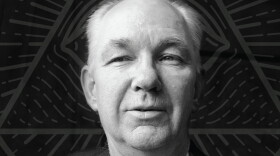 Note: This is an encore presentation of Reader's Corner. The episode originally aired in September 2022.An interview with Edward H. Miller, author of A Conspiratorial Life: Robert Welch, the John Birch Society, and the Revolution of American Conservatism. In the book, Miller argues that Welch’s paranoid right-wing nativism, dismissed by thinkers like William F. Buckley, gradually moved from the fringe into mainstream conservatism.
-
 The extraordinary true story of the Afghan women judges who fought for justice in the courtroom, and then fought to escape with their lives, from the bestselling British author Karen Bartlett
-
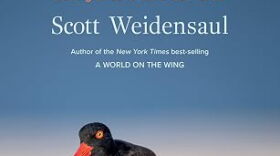 The Return of the Oystercatcher: Saving Birds to Save the Planet by Scott Weidensaul As populations fall and once-great migration multitudes wither away, the future of birds may seem grim. But surprisingly, from gnatcatchers and waterfowl to select groups of forest songbirds, some bird populations are soaring. Habitats and species that once neared extinction are now multiplying around the world because bird conservation is making things better.Because birds are so diverse, so ubiquitous, and cover virtually every square mile of the Earth’s surface, the fight to save the birds is also one to save the world. The Return of the Oystercatcher is an inspiring story of what’s working in bird conservation―and what can work for the rest of the planet.
-
 Our guest is one of Russia’s top investigative journalists, working and living in exile. In his latest book, co-authored once again by his fellow investigative journalist, Irina Borogan, Our Dear Friends in Moscow follows a group of young Russians, part of an idealistic generation who came of age in Moscow at the end of the 20 th century – the communist era had just imploded and an exciting and uncertain future lay ahead of them. Initially, the group enjoyed the freedoms of the new era, but the notion that Russia was destined to join the West, and Europe, in a new partnership began to fade. The Russian economy crashed, civil war stalked Chechnya, and terrorism came to Moscow. By the time of Vladimir Putin’s second and seemingly endless term as president, the country had embraced a kind of ethno-nationalism and was heading for war at home and abroad.
-
 For nearly eight decades, North Korea has marched defiantly to its own beat, shaking off its Soviet and Chinese sponsors to emerge as the world’s most enigmatic nation—a nuclear-armed state ruled by a dictatorial dynasty. Underpinning the state is a personality cult more soaked in religiosity than those constructed by Stalin or Mao—one that traces its roots back to the Christian fervor of post–Civil War America.
-
 The diversity principle – the idea that people with different backgrounds, identities, and viewpoints produce better work – was a core tenet of the first modern research university and the inspiration for John Stuart Mill’s classic treatise, On Liberty. But as a war on diversity upendsgovernment, corporate, and education policies, the history of the idea of diversity has never been more important. In his latest book, The Diversity Principle: The Story of a Transformative Idea, David B. Oppenheimer, a diversity skeptic turned believer, chronicles how diversity became a foundation of education over the last 200 years, how it evolved in commerce and science, and the inevitable implications of the current backlash.
-
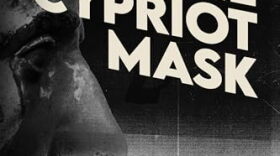 A priceless mask, a beautiful woman, a deadly secret, and a curse if it doesn’t fit. Philip Chandler, a small-town Idaho newspaper reporter and owner of the Fremont Herald, thought he landed a front-page scoop interviewing reclusive gun collector Ernest Hardy. Days later, Hardy is brutally murdered, and Chandler is pulled into a dangerous hunt.
-
 An Interview with renowned Taiwan expert and former intelligence officer J. Michael Cole. "The Taiwan Tinderbox: The Island-Nation at the Center of the New Cold War," is about how this Pacific nation has become a quagmire that risks igniting a full-scale global conflict.


